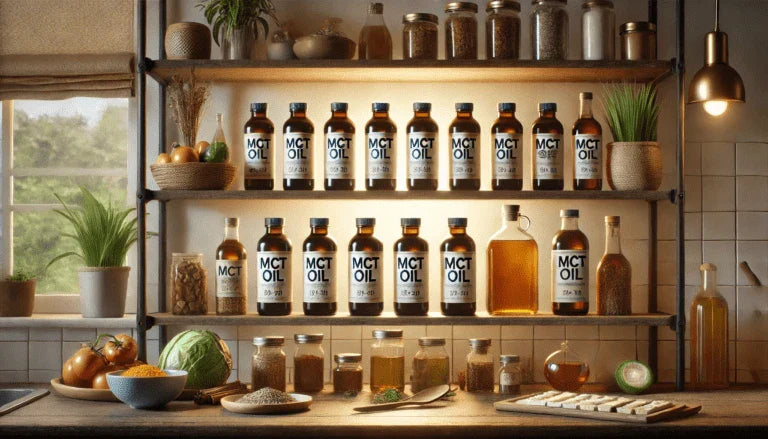
Yes, MCT oil expires. An unopened bottle stored correctly can stay usable for up to two years, but once you break the seal, oxygen exposure speeds up oxidation, and the oil starts to break down within a matter of months. MCT oil is the carrier oil in most hemp-derived CBD oils, so its shelf life has a direct effect on how long your CBD oil stays fresh and effective.
What Is MCT Oil?
MCT stands for medium-chain triglyceride, a type of fat defined by the length of its carbon chain rather than by the plant or animal it comes from. Triglycerides are classed by how many carbon atoms they contain. Long-chain triglycerides (13–21 carbons) dominate everyday cooking oils like sunflower, corn and olive oil, while medium-chain triglycerides (6–12 carbons) are far less common and are concentrated mainly in coconut oil, palm oil and small amounts of dairy fat.
Because MCTs are shorter chains, the body processes them differently. Rather than requiring the usual digestive breakdown, they pass more directly into the bloodstream and travel to the liver, where they're converted into an accessible energy source. Commercial MCT oil is usually extracted from coconut oil and concentrated down to two specific fatty acids, caprylic acid and capric acid, the fastest-metabolising of the group.
That same quick-absorbing quality is why MCT oil has become the standard carrier oil for CBD extracted from the hemp plant. Cannabinoids are fat-soluble, so blending hemp extract into MCT oil helps it move through the digestive system more efficiently, which is one reason many people build hemp-derived CBD oil into a daily wellness routine*.
Does MCT Oil Go Bad? Fact-Checking the Claim
Yes, MCT oil does go bad over time. It is a fat, and like any fat, it's vulnerable to oxidation, a chemical reaction triggered by exposure to oxygen, light, and heat that gradually breaks down its molecular structure. Oxidation doesn't happen the moment you open the bottle, but it starts immediately and accelerates the more the oil is exposed to air.
Unopened and stored correctly, a bottle of MCT oil can reasonably be expected to last around two years, and many bottles carry a printed best-before or use-by date to reflect this. That date, however, only applies to an unopened, sealed container. Once opened, the clock starts to tick and oxidation begins in earnest. The oil's practical shelf life shortens considerably, even if it's kept well.
MCT Oil Shelf Life at a Glance
|
Condition |
Typical Shelf Life |
Notes |
|
Unopened, stored properly |
Up to 2 years |
Check the printed best-before date on the bottle |
|
Opened, stored properly |
Typically 6–12 months after opening, depending on the manufacturer's guidance and storage conditions. |
Reseal the cap tightly after every use |
|
Exposed to heat or sunlight |
Weeks to a few months |
Oxidation speeds up significantly in warm, bright conditions |
|
CBD oil (MCT-based), once opened |
Around 6–12 months |
Hemp extract compounds degrade alongside the carrier oil |
Signs Your MCT Oil Has Expired
A few sensory checks are usually all it takes to know if a bottle has passed its best:
- A sour, rancid, or "off" smell, rather than the oil's usual near-neutral scent
- A bitter or unpleasant taste when the oil is normally mild
- Unusual cloudiness, dark flecks, or visible changes in appearance that were not present when the bottle was opened.
- A texture that has thickened, turned lumpy, or separated
If any of these apply, it's best to replace the bottle rather than continue using it.
How to Store MCT Oil and CBD Oil Properly
Correct storage is the single biggest factor in how long MCT oil and any CBD oil made with it stays usable:
- Keep it in a cool, dry, dark place, away from direct sunlight
- Store at room temperature; avoid cupboards near an oven or radiator where heat fluctuates
- Refrigeration isn't required. MCT oil may become cloudy when stored at very cold temperatures, but this usually reverses once it returns to room temperature.
- Reseal the cap fully and promptly after every use to limit oxygen exposure
- Avoid transferring the oil into unsealed or non-airtight containers
Does Being a CBD Carrier Oil Change the Shelf Life?
In most cases, CBD oil is simply hemp extract dissolved in MCT oil, so the two share a similar shelf life. The MCT base degrades through oxidation exactly as described above, and the plant compounds in the hemp extract are similarly sensitive to light, heat, and prolonged air exposure. A CBD oil left open on a sunny windowsill will lose quality faster than one stored properly in a cupboard.
At Blessed CBD, every batch is lab-tested for potency and purity, with THC kept to no more than 1mg per container across our hemp-derived range, and results are published for anyone who wants to check them before or after purchase. Storing your bottle correctly, as outlined above, is the best way to make sure it performs as tested for as long as possible.
FAQs
Does MCT oil need to be refrigerated?
No. Room temperature storage in a cool, dark place is sufficient. Refrigeration is optional and may only modestly extend shelf life once the bottle has been opened.
How long does opened MCT oil last?
Roughly six to twelve months when resealed tightly and kept away from heat and light, though this can vary by brand and storage conditions.
Can expired MCT oil make you sick?
Rancid oil in small amounts isn't generally described as dangerous, but it can cause digestive discomfort and simply doesn't taste pleasant. If an oil shows any signs of spoilage, it's best not to use it.
Does CBD oil expire faster than plain MCT oil?
Not necessarily faster, but the hemp extract adds compounds that are also sensitive to light and heat, so the same storage rules apply to both in equal measure.
The Bottom Line
MCT oil typically expires within about 2 years when unopened, and considerably sooner once the seal is broken. Because MCT oil is the carrier for most CBD oils, the same storage habits that protect a bottle of plain MCT oil also protect your CBD oil: a cool, dark cupboard, a tightly resealed cap, and a quick sniff-and-look check before each use.
*It is important to note that the benefits of these products have not been conclusively proven. This product is not intended to diagnose, treat, cure, or prevent any disease, and the NHS has not made any guarantees about the efficacy of such products.


