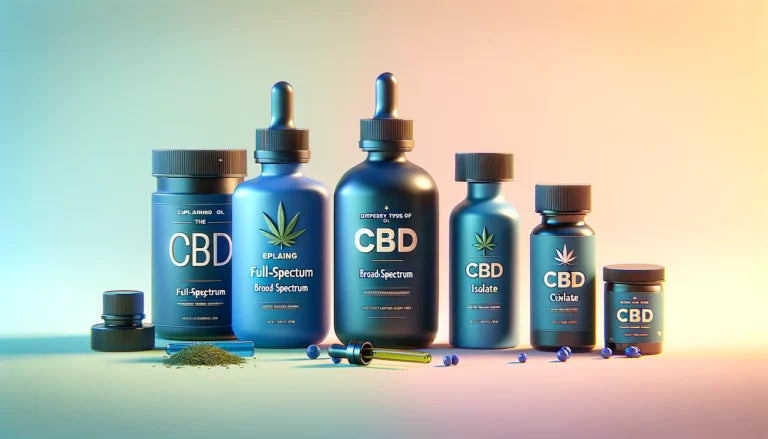
The main types of CBD are full-spectrum, broad-spectrum, and isolate, which differ in how much of the original hemp plant's compound profile remains after extraction. Full-spectrum retains the widest range of hemp compounds, including trace THC. Broad-spectrum removes the THC while keeping most of the other compounds. Isolate contains just pure CBD on its own.
That's the short answer, but "types of CBD" actually covers two separate questions. One is about what's in your CBD, such as full-spectrum, broad-spectrum, or isolate. The other is about what format you're taking it in, like oil, capsules, gummies, topicals, and more. Below, we've split these into two clear sections so you can find exactly what you're looking for.
CBD Types at a Glance
|
Type |
THC |
Other Cannabinoids |
Terpenes |
Common User Preference |
|
Full-spectrum |
Trace THC |
Yes |
Yes |
Maximum hemp profile |
|
Broad-spectrum |
Usually removed |
Yes |
Yes |
Avoiding THC |
|
Isolate |
No |
No |
No |
Pure CBD only |
Why Are There Different Types of CBD?
Different types of CBD exist because manufacturers can refine hemp extracts in different ways to meet varying consumer preferences, THC requirements, and product goals. The amount of processing applied after extraction determines whether the final product becomes full-spectrum, broad-spectrum, or isolate CBD.
Extraction Methods
All CBD products begin with an extract taken from the hemp plant, but what happens next determines the type of CBD produced. Full-spectrum extracts undergo the least refinement and retain the widest range of naturally occurring hemp compounds. Broad-spectrum extracts go through additional processing to remove or reduce THC while keeping most other compounds intact. CBD isolate is the most heavily refined option, with all other cannabinoids, terpenes, and plant compounds filtered out until only pure CBD remains.
Consumer Preferences
Not everyone is looking for the same CBD experience. Some people prefer products that retain as much of the hemp plant's original composition as possible, while others want a simpler product containing only CBD. Taste can also play a role, as full-spectrum extracts typically have a stronger natural hemp flavour, whereas isolate-based products are usually neutral in taste and aroma.
THC Considerations
THC is one of the main reasons different CBD types exist. While full-spectrum CBD contains trace amounts of THC within legal limits, some consumers prefer products that minimise or avoid THC altogether. Broad-spectrum CBD was developed to offer many of the hemp plant's other compounds without retaining significant THC, while isolate is commonly chosen by those seeking a CBD-only product.
Product Formulation Goals
Different CBD types also help manufacturers create products for specific purposes. Full-spectrum extracts are often used in oils and products designed to retain a broad hemp compound profile. Broad-spectrum extracts appeal to consumers who want multiple hemp compounds without THC. Isolate is frequently used in flavoured products, capsules, gummies, and formulations where a neutral taste, appearance, or precise CBD content is preferred.
Together, these factors explain why full-spectrum, broad-spectrum, and isolate CBD continue to coexist, each offering a different balance of hemp compounds, THC content, and formulation flexibility.
The Three CBD Types, by Compound Content
Every CBD product starts as an extract taken from the hemp plant. What separates the three main types is how much of that plant's original compound profile cannabinoids, terpenes, and flavonoids survives the extraction and filtering process.
Full-Spectrum CBD
Full-spectrum CBD keeps the hemp plant's complete compound profile, including its other cannabinoids (like CBG and CBN), terpenes, flavonoids, and trace THC. In the UK, that THC content is capped at no more than 1mg per container, so it stays well below the level associated with intoxicating effects.
Because it retains the fullest range of compounds, full-spectrum products are the ones most associated with the "entourage effect," the theory that hemp compounds work better together than any single compound would alone. Research into this effect is ongoing, and the picture isn't fully settled yet.
Broad-Spectrum CBD
Broad-spectrum CBD sits in the middle. It's produced by taking a full-spectrum extract and processing out the THC, while aiming to leave the other cannabinoids, terpenes, and flavonoids largely intact.
"Aiming to" is the operative phrase; broad-spectrum products can still contain non-zero trace THC depending on the extraction method and the manufacturer's filtering standards, which is why a certificate of analysis (COA) matters more than the label alone. Broad-spectrum is a common choice for people who want to avoid THC as closely as possible without switching to a completely stripped-back product.
CBD Isolate
Isolate is CBD in its most stripped-back form. Every other hemp compound cannabinoids, terpenes, flavonoids is filtered out during production, leaving crystalline or powdered CBD that's typically over 99% pure.
Because nothing else remains, isolate is the type most consistently labelled "THC-free." It's also flavourless and odourless, which makes it easy to add to food or drinks without altering the taste. The trade-off is that isolate doesn't offer any potential entourage-effect benefit, since it contains no other hemp compounds to interact with the CBD.
|
Type |
What It Contains |
|
Full-spectrum |
The complete hemp compound profile, including trace THC |
|
Broad-spectrum |
Most hemp compounds, with THC processed out |
|
Isolate |
Pure CBD only, with everything else filtered out |
None of the three types is inherently "better" quality than the others; quality comes down to the hemp source, the extraction process, and independent lab testing, not which type you choose. Always check for a third-party COA before buying, whichever type you pick.
The Different Types of CBD Products, by Format
Once you've settled on a compound type, the next decision is format. Here's how the main product categories differ.
CBD oil is the most common format and the base ingredient in most other CBD products. It's measured with a dropper and held under the tongue for around 60 seconds before swallowing, which allows some CBD to be absorbed directly through the tissue in your mouth. Our 1000mg CBD Oil is a popular starting point for anyone new to oils, and you can browse the full range in our CBD oils collection.
CBD capsules and softgels contain a pre-measured dose of CBD oil in a swallowable shell. They skip the dropper and the taste of hemp extract entirely, which makes dosing simpler, though they take longer to take effect than oil held under the tongue since they have to pass through digestion first.
CBD gummies and other edibles work the same way as capsules the CBD is processed through digestion but comes in a format that's easier for some people to build into a daily routine. Flavoured gummies, chocolates, and drinks all fall into this category.
Topical CBD products, including creams, balms, and lotions, are applied directly to the skin rather than ingested. They're generally chosen for use on specific areas rather than for full-body effects, and results vary by product and ingredient blend.
CBD patches deliver a steady dose through the skin over several hours, offering a more gradual and consistent release than a single oil dose or edible.
CBD vape products are inhaled, which means CBD reaches the bloodstream faster than with any oral format. This route isn't right for everyone, particularly anyone who prefers not to inhale vapour of any kind.
Which Type Should You Choose?
There's no single "best" type of CBD, but the right choice depends on what you're prioritising. If you want the widest range of hemp compounds and don't mind trace THC, full-spectrum is worth exploring. If you'd rather avoid THC altogether while still getting most of the plant's other compounds, broad-spectrum is the middle ground. If purity and a completely neutral taste matter most, isolate is the simplest option.
Format matters just as much as compound type. Oils and vapes tend to act faster; capsules, gummies, and patches trade some speed for convenience and consistency. Whichever combination you land on, look for a product backed by an independent COA, and start with a low dose while you get a feel for how it fits into your routine.
FAQs
What are the main types of CBD?
The three main types of CBD are full-spectrum, broad-spectrum, and isolate. They differ in how much of the hemp plant's original cannabinoid, terpene, and compound profile remains after extraction and processing.
What is the difference between full-spectrum and broad-spectrum CBD?
Full-spectrum CBD contains a range of hemp compounds, including trace amounts of THC, while broad-spectrum CBD has the THC removed during processing. Both retain multiple cannabinoids and other naturally occurring hemp plant compounds.
Is CBD isolate the purest type?
Yes. CBD isolate contains only CBD, with all other cannabinoids, terpenes, and hemp compounds removed. This makes it the most refined and concentrated form of CBD available compared with full-spectrum and broad-spectrum options.
Which type of CBD should I choose?
The right type depends on your preferences and priorities. If you want to avoid THC entirely, broad-spectrum or isolate may be more suitable. Full-spectrum may appeal to those who prefer a product that retains more of the hemp plant's original compounds.
Bottom Line
Understanding the difference between full-spectrum, broad-spectrum, and isolate extracts is the first step to finding the right CBD for you. From there, you can choose a format such as oils, capsules, gummies, or topicals based on which compound profile suits your preferences. Whatever type you choose, one of the best ways to assess product quality is to prioritise transparent manufacturing standards, independent laboratory testing, and an up-to-date certificate of analysis (COA).
*It is important to note that the benefits of these products have not been conclusively proven. This product is not intended to diagnose, treat, cure, or prevent any disease, and the NHS has not made any guarantees about the efficacy of such products.


